Posts

Called to Show Up

Image
Google Image Patrick Reardon, an author who regularly contributes to the National Catholic Reporter, wrote a column recently entitled, “God Calls Us to Show Up, Be Present.” The title intrigued me, and the article made several salient points. Reardon wrote about a group of men to which he belongs who meet regularly to talk mostly “about our individual and communal faith and about how our beliefs shape the way we live….” At a recent meeting, the question put to the group was: “What is the one thing in my faith of which I am absolutely sure?” As Reardon points out, it’s a question that people of faith should ask themselves frequently. After all, much of what Christians and Jews believe appears absolutely ludicrous to non-believers. We need to remind ourselves of that to avoid smugness and be ready to answer potential questions of belief for ourselves and others. Fully Alive  How did Reardon answer the question? “The one thing I’m sure of is that we’re called to show up...

Lesson from a Spotted Gecko

Image
Google Image My wife, Amparo, and I are visiting her native country of Colombia, staying the month in the peaceful, mountainous, semi-tropical town of Barichara. Already, we’ve gotten into the rhythm of the place and food is a big part: breakfast of fresh pineapple, tangerines off the tree in our house, various kinds of cheese breads, or arepas, an egg or two and pitch-black and strong Colombian coffee; lunch - the main meal - of meat, poultry or fish, vegetables and rice; and dinner, mostly of “calentado,” or leftovers. I spend much of my day reading and writing, with a long hike in late afternoon when the heat of the day gives way to the breezes that come like clockwork. Amparo likes to casually walk about town, making and renewing acquaintances with the shopkeepers (She’s from another part of Colombia, but we’ve been here several times before.) We both take early-afternoon naps in hammocks strategically placed to catch the breeze. We realize how privileged we are to be ...

Is This All There Is?

Image
Google Image In a visit last year to Dromore in County Tyrone, Ireland, my wife, Amparo, and I stayed in the ancestral home of the family of my great-grandfather. It’s a lovely place, thought to be in the family for over a couple of hundred years. Our hosts were Sínead McNulty, who stayed with us in Iowa for a couple of months several years ago, and her husband and toddler daughter. Sadly, they have been forced by the house’s deterioration and economic necessities to sell it. One of the home’s delights is a sun room built by Sínead’s Mum and Dad, the previous occupants. It features a library taking up a whole wall, and Sínead graciously offered me any books I wished. My luggage was already full so I chose only a thin paperback volume I read 50 years or so ago: “Man’s Search for Meaning” by Viktor Frankl. Translated Into 21 Languages The book had a great impact on me and I’ve referred to it several times in these blogs. It has been translated into 21 languages and the English...

When Family Members Lose Faith

Image
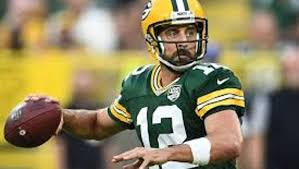
Google Image A recent story in USA Today says Green Bay Packers quarterback Aaron Rodgers’ family was reportedly upset by his comments about religion.  In an interview, Rodgers said religion was a big part of his life when he was younger. But beginning in high school, he lost the connection with his Christian upbringing. “Rules and regulations and binary systems don’t really resonate with me,” Rodgers said. He also said he doesn’t find church very welcoming and didn’t like having to dress up to go to church. And, he believes religion is a “crutch” for some people. Saved and Unsaved? “Religion can be a crutch. Religion can be something people have to have to make themselves feel better. Because it’s binary, it’s us and them; it’s saved and unsaved; it’s heaven and hell; it’s enlightened and heathen; it’s holy and righteous and sinner; and that makes a lot of people feel better about themselves — ‘I’ve got Jesus and I’m saved,'” Rodgers said. He also questioned G...

What’s So Great about Being Poor?

Image
Google Image The people with whom I worked as a priest in the altiplano of Bolivia in the 1970s were 98 percent indigenous. Subsistence farmers, they grew mostly potatoes, plus some quinoa and barley. “Subsistence” means that most of their crops were consumed by them and their families, adding vulnerability to the well-known risks of farming. Although they worked hard, they were extremely poor. They lived in one- or two-room adobe houses. A few had bicycles and a very few had motorcycles. Virtually none had cars or trucks and none that I knew had electricity or indoor plumbing. They were also treated like non-citizens in a country where their ancestors long predated the Spanish colonists. They had little access to health care or dental care where tuberculosis killed children in almost every family. They were treated like children by the courts, and police protection was almost non-existent.    At an altitude of 12,000 feet above sea level, average daytime temp...

Great Expectations

Image
Google Image My father, Pat Carney, who died in 1995 at age 94, was in a nursing home his final couple of years. During that period, I spent a lot of time there. At first, it was shocking. He had little privacy, having “strangers” assist him in the bathroom and in the shower, coming into his room at all hours and in some instances, restricting his freedom. Happily, the place had no persistent foul odor, was nice physically, and the staff was cordial and accommodating. But many residents sat around as in a coma, sleeping or staring into space. Obviously, some care facilities are not so nice and in my opinion, we Americans fall far short in taking care of our elderly. But regarding nursing-home care in general, my attitude is tempered by expectations. Usually, I’ve noticed, by the time you need nursing services, your expectations are pretty low. Evidence of the Latest Meal You have mental or physical disabilities that invariably come with aging. You can’t do many basic thi...

Does God Intervene in our Lives?

Image
Google Image My friend Bob, a retired lawyer, is a lifelong Christian and regular church-goer. But like me, he considers himself a skeptic. That may be why he’s a regular reader of this blog, one of whose principle aims is to assert that skepticism and faith are not mutually exclusive. We meet regularly over coffee and discuss mostly religion and politics, society’s two most taboo subjects. We’ve often discussed the subject of God’s intervention in our lives: Does he/she or doesn’t he/she? We agree that God doesn’t do so often, if at all. Bob leans firmly toward the “not at all,” saying he’d like to believe otherwise but his interpretation of history and the facts prevents him from doing so. He believes God hasn’t intervened in human history since the death of Jesus. I believe that God has intervened and, on occasion, still does. God-With-Us The whole premise of Christianity, after all, is that God definitively intervened in the person of Jesus – whose other name, “Emma...