Posts

Why Christianity Deserves a Fresh Look

Image
Google Image What comes to mind when you hear the word “Christianity?” A vague grouping of all the Christian denominations? A particular Christian religion, such Lutheranism or Catholicism? An image of old, judgmental people smug in their certainties, who have all kinds of biases and antipathy toward people who are unlike them? I hope it’s not the later image because that would merely be a stereotype. There may be a disproportionate number of older people among people who profess Christianity, but in my experience, they’re not any more judgmental, smug or biased than anyone else. In fact, I believe they are less so.   So what of the other images? When we think of these “groups,” we may think of why many people aren’t attracted to religion. We think of the institutions, of their political and social views, their religious services, which we may see as boring. Or we think of the clergy, which in the case of Catholicism, may include the publicity given to abuser priests (...

Seeking Optimism

Image
Google Image A recent National Public Radio program reminded me that the Musical “Hair” opened on Broadway 50 years ago, declaring that it was the beginning of “the Age of Aquarius.” “When the moon is in the seventh house And Jupiter aligns with Mars Then peace will guide the planets And love will steer the stars. ” Those lyrics, from one of the play’s principal songs, “The Age of Aquarius,” or “Let the Sunshine In,” were creatures of their age. It was the 60s, and despite social upheaval, exuberant optimism was easy to find in popular culture. “Hair” appeared the same year as “Hello, Dolly” and “Fiddler on the Roof,” and songs, like “ Turn, Turn, Turn,” “Abraham, Martin and John,” “If I had a hammer,” “Blowin in the Wind,” and “We Shall Overcome” expressed the idealism of the era’s youth. Bad News Travels Fast It’s not easy to find such expressions of optimism in today’s culture. Today, bad news travels fast. We’ve become accustomed to see and hear extraordinari...

An Antidote for FOMO (Fear of Missing Out)

Image
Google Image  I love Facebook. It allows me to keep in touch with people with whom I could easily lose touch, people with whom I would otherwise rarely communicate. That includes friends and relatives in the U.S., Ireland, Colombia and El Salvador, people whose friendship I value highly. But I understand that like most technological advances, social media have their negatives. For one thing, they can become addictive. People get hooked and become glued to their phones. Others become dependent on social media’s “news” content instead of turning to legitimate and reliable news outlets that reflect a range of views. But I recently learned from National Public Radio’s program, “Hidden Brain,” of another risk of dependence on social media. Social scientists discussed the results of a study showing that social media make some people unhappy because they are more likely to compare their lives with others. And some have FOMO, the fear of missing out. More Socially Isolated “ Stu...

What Makes Someone, or Something, Holy?

Image
Google Image In a 2013 blog called “The Idea of the Holy,” I wrote that for many, the word “holy” is an enigma. It’s not in our vocabulary. We don’t know exactly what it means and seldom use it. It’s one of those churchy words that leaves many contemporary people scratching their heads. I often think of this when singing, “Holy, holy, holy…” at Mass. As a believer, I can make the words my own, but are those words, and the vocabulary of religion, meaningful to the majority of young (and many older) people today? I doubt it. Similar words are salvation; transcendence; sin; redemption; Eucharist; sacrament; virtue; Trinity; bless and blessing; spirit and spirituality; discipleship; soul; the sacred; and the word “church” itself. The eyes of many people, including the young, glaze over when hearing these words. The words seem to have nothing to do with their lives. They’re part of the vocabulary of religion, which, I believe, is part of what makes religion seem irrelevant. M...

A New View of the Moon

Image
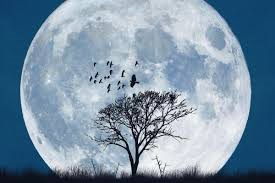
Google Image A three-minute video, called “A New View of the Moon,” went viral on YouTube recently, even though it showed little of the image of the big round rock that shadows the earth some 238,855 miles away. (You can watch it at https://www.youtube.com/watch?v=XCrJ3NflOpE .) Instead, it shows a couple of guys named Wylie Overstreet and Alex Gorosh taking their sophisticated telescope to the streets of Los Angeles, asking people at random if they want to take a look at the moon. The reaction most heard from people seeing an up-close image of the moon? “Oh, my God!” Says the commentator, presumably one of the filmmakers: “It makes you realize that we’re all on a small, little planet and we all have the same reaction to the universe we live in. I think there’s something special about that, something unifying. It’s a great reminder that we should look up more often.” An Anachronism The phrase, “Oh, My God,” which has become “OMG!” on Facebook and other social media ...

Does God Really Answer Prayer?

Image
Google Image I recently listened to Trevor Noah’s “Born a Crime: Stories from a South African Childhood” on the Audible APP. As the book’s title indicates, Noah - a comedian who hosts The Daily Show on the Comedy Central TV network - tells a humor-laced but sometimes sad story about growing up in South Africa, which was struggling to shake off the legacy of apartheid. Throughout the book, Noah exhibits a strong attachment to his mother, a deeply religious woman. In the last chapter, he describes how his mother was shot in the head by her husband, Noah’s stepfather. The bullet entered from behind her skull and exited her face. But his mother lived. In fact, she was out of the hospital in four days and back to work in seven. Still, as the young Trevor sat in the hospital room after she gained consciousness, he felt anger at God for allowing the shooting to happen. He sat by her bed, holding her hand, crying. “I was angry at God because all my Mom does is pray…and this...

Are We Salvageable?

Image
Google Image I missed most of the Easter Sunday NBC production of “Jesus Christ Superstar” but I’ve been watching segments on YouTube and have been so moved by Sara Bareilles’ rendition of “I don’t know how to love him.” You can watch it at https://www.youtube.com/watch?v=U3WRA0wSWDg&list=RDU3WRA0wSWDg . The production’s ratings were “a little shy of miraculous” for such a program in early April, says the periodical AdAge, and Bareilles undoubtedly deserves much of the credit. She plays Mary Magdalene, portrayed in the production as a reformed prostitute. Actually, there’s no evidence in the Bible that that was the case. It is thought to be a confusion that arose in the medieval church. Strong, Independent Woman Instead, scripture scholars view Magdalene as “a strong, independent woman who supported Jesus financially and spiritually.” The “prostitute” view, of course, makes a better story, but the misunderstanding does nothing to take away from the performance. And Jesu...