Posts

Friendship Is Next to Godliness

Image
Google Image I recently had a three-day visit from my long-time best friend, Gerald Waris. A retired priest from Kansas City, Gerald and I have been friends since he and his family moved into our neighborhood when he was somewhere between 3 and 5 years old. We both recently turned 80, so that gives you some idea about how long the relationship has lasted. We went to elementary school, high school, and eight years of seminary together. After 6 years as a priest in Kansas City and Bolivia, I received a dispensation from my priestly promises and married. Gerald served in parishes in Kansas City and St. Joseph, Mo. – our hometown – until he retired around the age of 65. Those facts and figures can’t begin to capture the significance of our friendship. Our families have been like second homes. He has been a rock of support, and I hope I’ve reciprocated. He’s always been there for me; and I’ve tried to do the same. Although we frequently talk and communicate electronically, we see each...
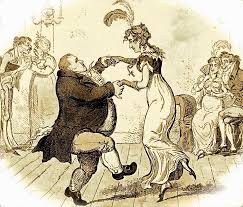

Those Who Don't Dance

Image
Google Image Israel recently held a national day of mourning for 45 men and boys killed in a stampede at a packed Jewish festival. The deadly crush at Mount Meron in northern Israel has been described as one of the worst peacetime disasters since the nation's founding in 1948, according to Yahoo News. At least 16 children and teens were among those killed. (Currently, many more people in the region are being killed in a never-ending battle between Israel and Palestinians.) The stampede broke out as tens of thousands of mostly ultra-Orthodox Jews thronged the reputed tomb of Rabbi Shimon Bar Yochai to commemorate the second-century Talmudic sage's death and mark Lag BaOmer holidays. The Talmud is the body of Jewish civil and ceremonial law and legend, says Wikipedia.   Religious Fanaticism? Undoubtedly many who read or heard this report shook their heads in dismay, grumbling about religious fanaticism and wondering if not all religion is fanatical. Some see fanaticism in ...

An Antidote to Feeling “Alone”

Image
  Google Image I’ve been watching a “reality show” on the History Channel called “Alone.” It features 10 people, who the credits say are trained survivalists. They agree to live in the Arctic, alone with a camera and in extreme conditions for an extended period. They are dropped off with only what they can carry in their backpacks. They each have a telephone that allows them to communicate with the show’s producers. But it is only to be used for emergencies or to ask to drop out and be returned to civilization. Each month during their stay in the wilderness, a medical team visits to make sure the participants are physically fit to continue. The one who outlasts all the rest wins $500,000. I find the show fascinating in that it captures not only the physical difficulties involved but the psychological ramifications of extreme isolation. Assuming that the show is as advertised (Some “reality shows” are said to be highly scripted and planned.), it shows the incredible ingenuity ...

Getting to Yes

Image
Google Image In my five-year, post-retirement career as a mediator, the usual goal was agreement between two sides who were at-odds. And one of the principal ways of getting there was to get them to say what they really wanted from the mediation. Not that they simply wanted to “win,” or wanted to defeat the other party or that they wanted to save face. No, the key question is what both sides really want. Once you establish that, you have to determine the best way of getting there. It requires honesty on both sides, of course, and that isn’t always easy to get. Much of this is laid out in a book called “Getting to Yes” by Roger Fisher, William Ury and Bruce Patton. And one of the ways to proceed, says the book, is to “separate the people from the problem.” Assuming that both sides clearly want to resolve their differences and settle a dispute by mediation, you have to try to get them to see things objectively. That’s also not easy. Something You Really Want Getting to “yes” regard...

Just Do It!

Image
Google Image As a youngster, Hans Kung recalled coming home “radiant” when he realized ‘I can swim. …The water’s supporting me.’ “For him,” according to an article in the National Catholic Reporter about the famous theologian, quoting from his memoir, “This experience illustrated ‘the venture of faith, which cannot first be proved theoretically by a course on dry land but simply has to be attempted: a quite rational venture, though the rationality only emerges in the act.” This blog is written primarily for people “who have given up on God and/or religion.” I’m doubtful that many people in this category actually read the blog. They aren’t likely to be drawn to a blog like this. But I hope that others who read it pass it along to them. When Things Don't Go Well According to what I’ve read about the “nones,” literally those who answer “none” when asked about their religious affiliation, and from personal experience, I believe most people who have given up on God and/or religion...

Forgive Us Our Trespasses

Image
Google Image We all know families in which some members refuse to talk to others in the family. They have some complaint, or a series of them, for which forgiveness is out of the question. The phenomenon is widespread. Family gatherings at Thanksgiving are so well known for their disputes and strife they’ve become a regular target of comedians and commentators. I often think of this when praying the Our Father, also called the Lord’s Prayer because it was Jesus’ response to a request from his disciples to teach them to pray. And I recall a religious retreat I attended years ago in which the retreat master, a Catholic priest, asked participants to name the most important part of the Our Father. There were various responses, but the one that he was looking for was, “Forgive us our trespasses as we forgive those who trespass against us.” A Summary This, he said, was not only an important part of the prayer but a summary of what is expected of a Christian. It’s hard to imagine how ...

Can We Learn Anything from a Politician?

Image
Google Image I’ve recently finished reading an exhaustive biography of Harry Truman, the 33rd president of the United States. At 1,409 pages, it’s probably one of the longest books I’ve read but well worth it since it covered much of the most perilous and interesting times in recent American history. The book held special interest for me because Truman was president during much of my childhood, from 1945 to 1953, and was from Independence, Mo., near where I grew up in St. Joseph and Kansas City. In 1993, biographer David McCullough won the Pulitzer Prize for authoring the book. “No president in history had had to face so many important problems in so brief a time…,” McCullough writes. Truman was a farmer, World War I veteran, men’s store owner, and Kansas City politician before becoming senator, vice president, and chief executive after the death of President Franklin Roosevelt. The Dreadful Decision He had to finish the Second World War and that included the dreadful decision ...