Posts

Losing God and the Sense of Regret
Image
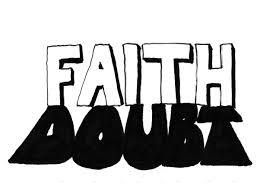
Google Image In her book, “The Nones Are Alright; A New Generation of Believers, Seekers and Those in Between,” Kaya Oakes sums up nicely the plight of young people who are leaving God and religion behind. They often do so “with a sense of regret,” she writes. “Instead of becoming confirmed non-believers, they live in a space of permanent questioning.” She quotes a 27-year old man whom she interviewed about his inability to believe in God. “I really want to,” he said. “But there’s nothing that certainly states, ‘Yes this is fact,’ so I’m constantly struggling.” Oakes, author of four books, including “Radical Reinvention: An Unlikely Return to the Catholic Church,” was among those who gave up on God and religion before returning to her faith. She teaches writing at the University of California at Berkeley. More Cerebral Than Emotional In these blogs I tend to be more cerebral than emotional but I’m sure that most people – no matter how intellectual we may believe we...

Three Teens on an Irish Pier

Image
Google Image At age 19, I made my first of many trips to Ireland where my mind recorded a simple but unforgettable scene. A friend and I had driven to the far west end of the Dingle Peninsula, said to be the closest spot to the U.S. Before tourists discovered it, it was also one of the most isolated parts of Ireland where many people still spoke Irish. It was a cool day. The green of the place was stereotypically Ireland. Lumps of land called the Blasket Islands could be seen in the distance protruding from a wild sea. Three teens about my age, two boys and a girl, were alone on an old pier that jutted a few dozen feet into the Atlantic doing what they could to entertain themselves. One of the boys was playing a concertina, sort of a primitive accordion, the other a “penny whistle,” a kind of Irish flute. The girl was singing.   I don’t know if they noticed our presence and I didn’t know the tune, but with the sun casting its glittering hue over the ocean, the scene ...

How Could God Allow Dallas, Baton Rouge, St. Paul?

Image
Google Image I once had a heated conversation with a police officer on the subject of evil, specifically, whether some people are simply evil, as he contended, or whether as I maintained, people “go bad” because of life circumstances or factors we don’t yet understand. Several weeks later, the officer’s wife was jogging on a trail in Minnesota when she was brutally attacked by a man who did all he could to kill her. He strangled her, beat her and used a stick to gouge her eye. She fought him and survived but she lost the eye and was badly injured. As I recall, the attacker was taken into custody, and presumably prosecuted, but no cogent motive was ever provided. When I read about it in the newspaper, I recalled the conversation with the officer and reconsidered my theory about evil. An Agnostic on the Subject I didn’t come around to the officer’s view but became an agnostic on the subject, having to acknowledge that I just don’t know. I want to believe that humans are ba...

Slip Slidin’ Away: The Fear of Falling Behind

Image
Google Image My parents’ scare tactic for encouraging their five children to study was that if we didn’t, we could wind up being “ditch diggers.” That occupation was relatively rare even in my childhood when mechanized digging was being introduced but my parents undoubtedly heard that advice from their parents when such jobs were common. The equivalent today may be “slinging burgers at McDonald’s.” No matter how you express it, few things worry humans more than the fear of “not keeping up,” of falling behind others in the economic and social rankings we keep in our heads. Much of contemporary advertising is based on this idea. Successful people drive nice cars, take great vacations and choose food and medicines that make them active, healthy and happy. Buy our product and you can be among them. A woman interviewed after the recent Brexit vote in the United Kingdom, in which voters decided to leave the European Union, said many believed the union was keeping them from econo...

Where Did We Get the Idea of “God?”

Image
Google Image People searching for God have probably asked themselves this question at one time or another. And the short answer is, it depends on whose god you’re talking about. Worship of a god or gods is shrouded in the cloud of history, or rather, pre-history. The concept of God as most modern people envision him/her results from any of three abstract ideas or their combination, according to Wikipedia, and of course, the Bible, the Koran and similar sacred books. The abstractions range from God as “… the deification of an esoteric, mystical or philosophical entity or category” to God as the “Ultimate,” the “greatest good,” the “absolute infinite” the “Transcendent," to God as “the ground of being.” Many may not be familiar with these concepts because they originate in the philosophical world of Greek philosophers like Aristotle, who lived in the fourth century before Christ (BC). At some point – definitively with the ideas of Thomas Aquinas in the 13 th century...

When “Common Wisdom” Fails Us

Image
Google Image “Cleanliness,” my mother used to say, “is next to godliness.” My mother grew up in a poor family. Her father abandoned his wife and six children so my grandmother had to make a living by doing other people’s laundry. I'm sure it was hard to keep the children clean and my mother probably heard my grandmother use that adage often to encourage her children to wash regularly.   Though often repeated and considered part of the “common wisdom,” however, that saying is among many that simply don’t ring true. Think of the millions of people living in the world’s slums, the millions of kids living on the streets. They have little opportunity to keep clean and are too busy trying to survive to worry about hygiene. Are they not next to godliness? I would say they are closer simply by virtue of being poor. Another such saying is, “You can be anything you want to be.” That is among the greatest of fraudulent maxims. Sure, if you’re a middle or up...

When Church Doesn’t Feel Like a Spiritual Place

Image
Google Image “As a child,” writes Annika Freese in a recent issue of America magazine, “I could never find God in his house. “Sitting in Mass I felt like a machine that could not manage to function properly. I had all the right parts and pieces, but together they would not produce the desired outcome. Looking around, it seemed as if everyone else was automatically filled with God’s grace as soon as they walked in the church doors. “Church did not feel like a spiritual place to me,” Annika continues.   “I felt judged within its walls and like I did not belong, because I could not feel what everyone else around me appeared to be feeling.” First, Annika – a high school senior who lives in Amman, Jordan, and appears to be wise beyond her years – is certainly not alone. Millions of people feel disconnected when attending church services. In my experience, the liturgy that attracts, inspires and confirms you in faith is the exception not the rule. Undoubtedly Clouded Se...